
Table of Contents
Introduction
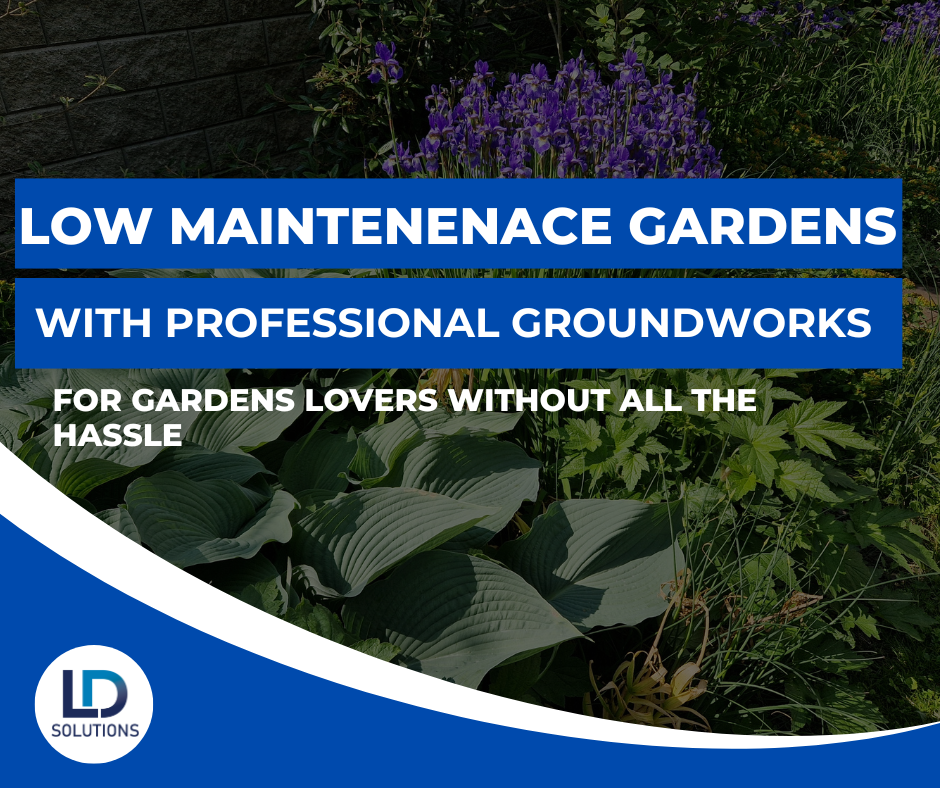
Low maintenance gardens with professional groundworks are the way forward! Aren’t you tired of spending your weekends mowing, trimming, and weeding? Imagine having a garden that almost takes care of itself, a serene space you can enjoy without constant upkeep.
With professional groundwork services, creating a low maintenance garden becomes not only achievable but also sustainable.
These gardens are the perfect blend of practicality and beauty, allowing you to reclaim your time while still enjoying a lush and inviting outdoor space.
Whether you are looking to revamp your current garden or start fresh, this guide will walk you through the process of designing and implementing a low maintenance garden with the help of professional groundwork services.
Why Choose a Low Maintenance Garden?
Maintaining a traditional garden often feels like a full time job. Between constant watering, pruning, weeding, and mowing, it’s easy to feel overwhelmed.
A low maintenance garden solves these issues by reducing the time, energy, and resources needed to keep your space looking great.
Who Benefits from Low Maintenance Gardens?
Low maintenance gardens are ideal for:
- Busy professionals with limited time
- Seniors or individuals with limited mobility
- Budget conscious homeowners looking to reduce water and fertiliser costs
- Anyone who wants a stunning outdoor space with minimal effort
What Does a Low Maintenance Garden Look Like?
A low maintenance garden focuses on efficiency and sustainability without compromising on aesthetics. Key features include:
- Drought Resistant Plants: These thrive with minimal watering and are perfect for conserving resources.
- Hardscaping: Elements like patios, pathways, and gravel areas reduce the need for constant mowing or weeding.
- Efficient Irrigation Systems: Automatic or drip irrigation ensures plants receive just the right amount of water.
- Durable Materials: Composite decking, gravel, and native plants are long lasting and weather-resistant.
Benefits of Using Professional Groundwork Services
When designing a low maintenance garden, the groundwork is critical. Professional groundwork services ensure that your garden’s foundation is set up for long term success.
Here are some benefits of hiring experts:
1. Expertise in Soil Preparation
Professionals analyse soil type, drainage, and fertility, ensuring optimal plant growth. They also use techniques like aeration, composting, and soil amendments for enhanced quality.
2. Customised Design
Groundwork experts tailor designs to your preferences and property layout, creating a seamless and functional space.
3. Durable Installations
Professionally installed irrigation systems, walkways, and patios are built to last, saving you from costly repairs or replacements.
4. Time and Energy Savings
With their experience, professionals complete the work quickly and efficiently, allowing you to enjoy your garden sooner.
Key Elements of a Low Maintenance Garden
Choosing Native Plants
Native plants are the unsung heroes of low maintenance gardens. Adapted to local climates, they require less water, fertiliser, and attention. Popular options include lavender, sage, and ornamental grasses.

Here is a fine example of a the native plant Lavender Flower
Using Quality Mulch
Mulch plays a significant role in keeping maintenance low. Organic mulches, such as bark or wood chips, retain moisture, suppress weeds, and improve soil health over time. For a polished look, consider decorative gravels or stone chips.
Planning and Designing a Low Maintenance Garden
Assessing Your Space
Every garden is unique, and understanding its characteristics is the first step in designing a low maintenance layout. Consider:
- Sunlight: Identify sunny, shady, and mixed areas.
- Soil Type: Test for pH levels, texture, and drainage.
- Size: Allocate space for plants, hardscaping, and seating.
Creating Zones
Zoning divides your garden into functional areas, such as:
- Relaxation Zone: Decking or patio for lounging
- Planting Zone: Beds with hardy, drought resistant plants
- Play Zone: Safe spaces for children or pets
- Pathways: Gravel or paved paths for easy navigation
Groundwork Services for a Lasting Landscape
Lawn Replacement and Alternatives
Traditional lawns demand frequent watering, mowing, and fertilising. Consider replacing them with:
- Artificial Turf: Provides a lush, green appearance without maintenance.
- Clover Lawns: Low growing and drought tolerant.
- Gravel Gardens: Create a minimalist and stylish landscape.
Effective Irrigation Systems
Installing an automatic irrigation system is a game changer. Drip irrigation ensures water is delivered directly to the roots, minimising waste and overwatering.
Groundwork professionals can design systems tailored to your garden’s needs.

Automatic water irrigation systems to consistently keep garden and plant life healthy.
Soil Improvement Techniques
Healthy soil is the foundation of a thriving garden. Professionals use techniques like:
- Aeration: Improves air and water flow in compacted soil.
- Composting: Adds organic matter for richer soil.
- pH Balancing: Adjusts soil acidity for optimal plant health.
Incorporating Hardscaping for Minimal Maintenance
Hardscaping adds visual interest and reduces maintenance needs. Popular options include:
- Stone Pathways: Durable and stylish, perfect for defining walkways.
- Gravel Beds: Low maintenance and great for drainage.
- Raised Planters: Easy to manage and ideal for small spaces.
The Role of Composite Decking in Low Maintenance Gardens
Composite decking is a versatile solution for creating seating areas, pathways, or patios. Unlike wood, it’s:
- Resistant to weather and fading
- Low maintenance and splinter free
- Available in a variety of colours and textures
Adding composite decking instantly upgrades your garden while keeping upkeep to a minimum.
Routine Maintenance Tips to Keep It Easy
Even low maintenance gardens require occasional care. Keep these tips in mind:
- Remove Debris: Fallen leaves and branches can damage plants or hardscaping.
- Clean Hardscaped Areas: Sweep or hose down patios and pathways as needed.
- Prune Strategically: Trim plants annually or biannually to maintain their shape.
- Monitor Irrigation: Check for leaks or blockages in irrigation systems.
Mistakes to Avoid in Low Maintenance Gardens
- Choosing High-Maintenance Plants: Exotic species may require more attention and resources.
- Neglecting Soil Preparation: Poor soil leads to unhealthy plants.
- Overcomplicating Irrigation: Stick to simple, efficient systems.
- Skipping Mulch: Mulch reduces weeds and conserves moisture. Don’t overlook it!
Cost of Professional Groundwork Services
Groundwork services vary in cost depending on the size and complexity of your garden. While the initial investment may seem high, it pays off with a durable, efficient, and beautiful landscape that requires minimal upkeep. Typical costs include:
- Soil testing and preparation
- Installation of irrigation systems
- Hardscaping materials and labour
DIY vs. Professional Groundwork: Which is Best?
DIY
- Pros: Cost effective, customisable
- Cons: Time consuming, requires expertise
Professional Services
- Pros: Reliable, durable, and efficient
- Cons: Higher upfront cost
The choice depends on your budget, time, and confidence in your DIY skills.
Environmental Benefits of Low Maintenance Gardens
A well designed, low maintenance garden contributes to environmental sustainability by:
- Conserving water with drought resistant plants
- Reducing chemical use
- Supporting pollinators and local wildlife
- Decreasing energy consumption for upkeep
Conclusion
Creating low maintenance gardens doesn’t mean sacrificing beauty or functionality. By partnering with professional groundwork services, you can design a stunning, practical space that requires minimal effort.
From selecting native plants to incorporating durable hardscaping, every detail contributes to a sustainable and enjoyable garden.
So, why not take the first step today? With the right groundwork, your dream garden is closer than you think.
Frequently Asked Questions
1. What is the best ground cover for low maintenance gardens?
Drought tolerant ground covers like creeping thyme, clover, and sedum are excellent choices. They spread naturally, require minimal watering, and resist weeds.
2. How much does it cost to create low maintenance gardens?
Costs vary based on garden size, materials, and complexity. However, investing in quality groundwork and durable materials can save you money in the long term.
3. What plants require the least maintenance?
Native plants, succulents, and hardy shrubs are the best options. They adapt to local conditions, resist pests, and need little attention.
4. Is composite decking worth the investment?
Yes, composite decking is a low maintenance, long lasting alternative to wood. It’s resistant to weathering and requires no staining or sealing.
5. Can I create a low maintenance garden on a budget?
Absolutely! Focus on essentials like groundwork, native plants, and DIY mulching to create low maintenance gardens without breaking the bank.
For any further information or if you are interested in speaking to someone about having a low maintenance garden, please contact LDSolutions via mobile – 07813490989. Or email us at – neil@ldsolutions.co.uk.
No responses yet